
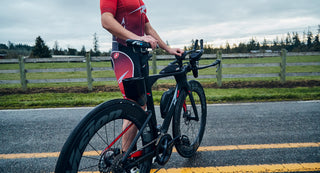
So you've caught the triathlon bug. Maybe you finished your first sprint tri on a borrowed road bike, or you've been watching Ironman coverage and something clicked. Either way, you're here because you're thinking about buying your first triathlon bike—and you're probably a little overwhelmed.
Good news: it doesn't have to be complicated. Let's cut through the noise.
What Makes a Triathlon Bike Different?
Triathlon bikes are built for one thing: going fast in a straight line while conserving energy for the run. The geometry puts you in a more aggressive, aerodynamic position with your torso leaning forward, arms stretched out on aero bars. This position reduces wind resistance and uses different muscle groups than traditional road cycling, saving your running legs for later.
The key differences from road bikes include a steeper seat tube angle (typically 76-78 degrees versus 72-74 on road bikes), integrated aero bars, and frame designs optimized for cutting through wind rather than nimble handling. Road bikes prioritize versatility and group riding; triathlon bikes prioritize individual speed.
The Biggest Mistake Beginners Make
Here's what nobody tells you: the fastest bike is the one that fits you properly. A $10,000 superbike in the wrong size will be slower (and more uncomfortable) than a $2,000 bike that fits like a glove. Beginners often obsess over components and carbon layups while ignoring the fundamentals.
Fit matters more than weight. Fit matters more than aerodynamics. Fit determines whether you can actually hold an aero position for two hours without your back screaming.
What to Look for in Your First Tri Bike
Adjustability: Your fit will change as you get stronger and more flexible. Look for bikes with adjustable aero bar reach, stackable headset spacers, and seat posts that allow fore/aft movement. Entry-level bikes often skip these features—which is exactly why many beginners end up buying twice.
Frame Material: Carbon fiber offers the best combination of light weight, stiffness, and vibration damping. Aluminum works too but tends to transmit more road buzz. At the beginner price point, a well-designed carbon frame will serve you better than premium aluminum.
Components: Don't get seduced by component spec. Shimano 105-level groupsets are reliable, shift smoothly, and are easy to service. The performance difference between 105 and Ultegra is measurable in a lab but negligible in your first races. Spend the savings on a professional bike fit instead.
How Much Should You Spend?
For a quality entry-level carbon triathlon bike, expect to spend between $2,000 and $4,000. Below $2,000, you're often looking at aluminum frames or significant compromises in fit adjustability. Above $4,000 as a beginner, you're paying for marginal gains you probably can't utilize yet.
Here's the realist take: that money could also go toward coaching, race entries, or a solid power meter—all of which will make you faster than an extra $2,000 in frame material.
Direct-to-Consumer vs. Traditional Bike Shops
Direct-to-consumer (DTC) brands have changed the equation. By cutting out distributors and retail markups, DTC companies can offer comparable or better specifications at significantly lower prices. The tradeoff is you don't get the in-person fitting experience—but many DTC brands have addressed this with detailed sizing guides, virtual fit consultations, and generous trial periods.
The value proposition is compelling: same Taiwanese factories that produce the big-name bikes, same carbon layups, same components, but 30-50% less cost.
The Bottom Line
Your first triathlon bike should be: properly sized with room for fit adjustment, made of quality carbon fiber, equipped with reliable mid-tier components, and priced to leave budget for essentials like a bike fit, helmet, and shoes. Everything else is details.
The best time to buy a triathlon bike was yesterday. The second best time is after you finish reading this guide and actually measure yourself for sizing.